Call (888) 543-2427
www.ibsenlaw.comFrequently Asked QuestionsContact Carilyn IbsenSitemap
Law Office of
Carilyn Ibsen PLLC
Defending Clients in North Carolina and South Carolina

Attorney Carilyn Ibsen's Blog

about Criminal Defense in North Carolina and South Carolina


Thursday, September 18, 2014

DWI Arrest in Charlotte? What is a Portable Breath Test?

SITUATION: 
You have been pulled over by a police officer for DWI. The Officer asks you to exit the vehicle. Suddenly a small device is pulled from the patrol car. Officer asks you to blow in this device. What should you do?

This device is known as a Portable Breath Test- commonly called a PBT. Contrary to what some Police Officers will tell you, this is not the breath device licensed drivers are required to take under North Carolina implied consent laws. Actually, the numerical result of this test is not even admissible in court.
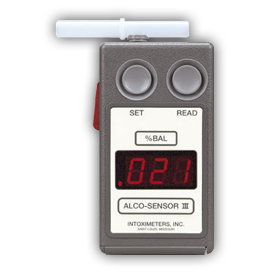
Portable Breath Devices were issued to police officers as a tool to determine whether probable cause exists to arrest a person for DWI. It is just one of several factors
among several others, including field sobriety tests, used in this determination.

In my opinion, police officers have become too reliant on the result of this test during the initial investigation of a DWI in the field. A Court of Appeals case issued just this week essentially reiterated this.

In State v. Overocker, it was held that a positive result for alcohol and admission by the driver that they consumed alcohol was not sufficient probable cause for arrest.

Remember, it is not illegal to drive with alcohol in your system, unless under 21 or in violation of specific terms of probation. It is illegal when drive when that alcohol has impaired your ability to drive safely or your blood alcohol level is .08 or above.

Returning to the questions presented at the beginning of the post- which test is a license driver required to take under North Carolina implied consent laws?

If a driver is stopped by a police officer under suspected DWI, the implied North Carolina implied consent law requires a person to submit to a breath or blood test after probable cause to arrest.
This breath test is usually administered at a police station under regulated conditions or the blood draw is administered at a hospital.

What happens if a person refuses to take this test- that is another post to come later- The DWI refusal.

Criminal Law Updates Provided by The Law Office of Carilyn Ibsen PLLC. (888)542-2427

Labels: ,

posted by Carilyn Ibsen at 0 Comments

Wednesday, January 12, 2011

The Modern Day Superstore

Prior to the snowstorm of 2010 arriving in Charlotte Sunday night, I went shopping for a sled over the weekend. My mother told me to go to Bed, Bath and Beyond. I thought this was strange but arrived at the store to find that they had sleds, dog safe salt for your driveway and a device to make snowballs. The modern day superstore.

Standing in line to pay, I saw a portable breathalyzer machine the size of a remote control on your car keys. Hanging next to the alarm clocks, ice packs and drain cleaners was a portable alcohol testing device. I blogged about one being sold at Office Depot during the Christmas holiday season. I was shocked then, but Bed, Bath and Beyond? Really? As I stated in an earlier post, these machines are scientific instruments that are still capable of error when properly calibrated and operated by trained police officers. I'm curious to know how people feel about this being sold at a store that specializes in household items.

Legal Updates Provided by The Law Office Of Carilyn Ibsen PLLC (888)543-2427

Labels: ,

posted by Carilyn Ibsen at 0 Comments

Tuesday, March 9, 2010

DWI/DUI Breath Test- Dismissals in DC

The Washington D.C. Police Department is trying to determine what went wrong with the police department's breath alcohol machines. The department uses the Intoxilyzer 5000 EN machine. The police department has called for an investigation into the matter. Meanwhile, attorneys representing those accused of DWI/DUI are finding their clients cases reduced or dismissed. According to an article in the Washington Examiner, the city has "rebuffed" several judges requests for an explanation after DWI cases dating back to October 2008 were dismissed or reduced.

In North Carolina, a person should be given the option of a breath or blood test when arrested for a DWI/DUI. Many people assume that a breathalyzer machine is just like any other machine- turn it on and it works. This is not always the case. Although widely used by police departments, they can produce an inaccurate reading. A criminal defense attorney can contest the accuracy of the breath test in a DWI case. Radio frequency interference, breath technician operator errors, improper calibration, and improper officer training are common examples that can produce an inaccurate reading. Mecklenburg County Police Department primarily utilizes the Intoximeter EC/IR II for breath tests in DUI/DWI cases.

Labels: ,

posted by Carilyn Ibsen at 0 Comments

Thursday, November 26, 2009

DWI/DUI Breathalyzer- A NC Christmas Gift

Looking for a Christmas gift for a loved one? I was looking through the Black Friday Christmas ads this Thanksgiving morning and came upon a stocking stuffer on sale at OfficeMax. For $49.99 you can purchase a Backtrack Personal Breathalyzer, a small breathalyzer that estimates your blood alcohol content in seconds. To learn more,  click here

Before you get excited, let me caution you. Sobriety on roadways is a serious issue. I found it ironic that this was being advertised at a store that sells office products. Moreover, alcohol detection devices are scientific instruments. They need to be treated with care, calibrated often, and operated by those who have been trained to use it. They do not always give a true reading. Whether the breathalyzer was operated correctly and in good working condition at a time a person was arrested is a central issue in any DWI/DUI case in North Carolina. When I was a prosecutor, I spent time at the crime lab being trained on the machine and learned about the process behind them. It was an excellent way to learn about the machine, and more importantly, how it failed.

Labels: ,

posted by Carilyn Ibsen at 0 Comments

Sunday, September 27, 2009

North Carolina Changes DUI/DWI Law

I wrote an earlier post addressing the recent case of Melendez-Diaz v. Massachusetts. The North Carolina legislature issued a response to the Supreme Court ruling in Melendez-Diaz. Four pages of single space text, that appears to be written in the English language, essentially changes the previous law that allowed the State to admit blood and breath test results in DUI/DWI cases without a witness. This is important because once the US Supreme Court issues an opinion ruling a law unconstitutional, the state must change the law. Here is the new statute- good luck reading!
http://www.ncga.state.nc.us/Sessions/2009/Bills/Senate/PDF/S252v5.pdf

With respect to blood and breath results in DUI/DWI cases in North Carolina, the State will now be required to notify the accused 15 business days before the date they intend to introduce the result in court and provide the accused with a copy of the result. The accused will then have five business days before the proceeding to file a written objection with the court. If the objection is not filed, the result can be admitted without any witness.

Jessica Smith from the UNC School of government does a great job explaining the new law. Here is the link to her summary- http://www.sog.unc.edu/programs/crimlaw/melendez-diazjsmithmemo.pdf

Labels: , , ,

posted by Carilyn Ibsen at 0 Comments

Monday, September 14, 2009

Driving While Intoxicated in North Carolina- Blood/Breath Test Admissibility

Anyone arrested for driving while intoxicated or a DUI immediately wants to know the result of their breath or blood test. Was I over a .08? Will I face charges if I was .07? These are all valid questions, but a central question right now for a defense attorney is how the District Attorney is going to have breath or blood results admitted at trial. A few months ago the US Supreme Court issued an important ruling in Melendez-Diaz v. Massachusetts that subsequently affects the way DWI/DUI cases are proceeding throughout North Carolina Courts.

Prior to the Melendez-Diaz ruling, state law permitted the District Attorney to admit breath or blood test results by a simple affidavit. The person who administered the breath test would never testify. The chemical analysis of a blood result or breath test was submitted on paper and defense attorneys were not given the opportunity to cross examine the witnesses that performed these crucial tests. A defense attorney could always subpoena the witnesses themselves, but many felt they shouldn't have to. The US Supreme Court essentially agreed and stated in the Melendez-Diaz opinion that the burden "is on the prosecution to present it's witnesses, not on the defendant to bring those adverse witnesses into court." Remember, when a person is accused of a crime, it is the prosecution's burden to prove every element of an offense and everyone is presumed innocent until proven guilty. Prior to this case, I felt the law permitting a blood or breath test result admissible by affidavit essentially shifted the burden to the defense to show that the test was wrong. This effectively made defendants prove their innocence, rather than the prosecution proving their guilt.

So how does this change things on a practical level? The District Attorney must call additional witnesses at trial and cannot rely on an affidavit to prove a breath or blood result. Starting October 1st, there will be additional changes to this law. More on that later. Meanwhile, the District Attorney is sending out extra subpoenas.

Here is a short YouTube video on the subject. Looks like this was done before the Supreme Court issued the opinion: http://www.youtube.com/watch?v=C5HmaDjeH5Y

Labels: , , ,

posted by Carilyn Ibsen at 0 Comments